Jill and I are adventurers at heart—always ready for a spontaneous trip. One quiet Saturday, we decided to drive from Kisumu to Kakamega. The goal? To check out some handmade sofas we’d heard about and wanted to purchase them for our mother. Kakamega furniture artisans rarely disappoint, and this time was no exception. We left with a few contacts and lots of inspiration.
But as we began our journey back, something tugged at our minds.
“We’ve passed this road countless times… and yet we’ve never actually seen the Crying Stone up close.”
That was it—we were stopping.
A Hidden Entrance and a Rocky Start
The entrance to the Crying Stone is by the roadside, but blink and you’ll miss it. It could use better signage. Still, we paid the standard revenue fee of about KES 150 (1.16 USD) and the boom gate was lowered. A few meters in, we realized we couldn’t drive further—a small but important detail the custodians forgot to mention. So we parked by the roadside and began to trek.
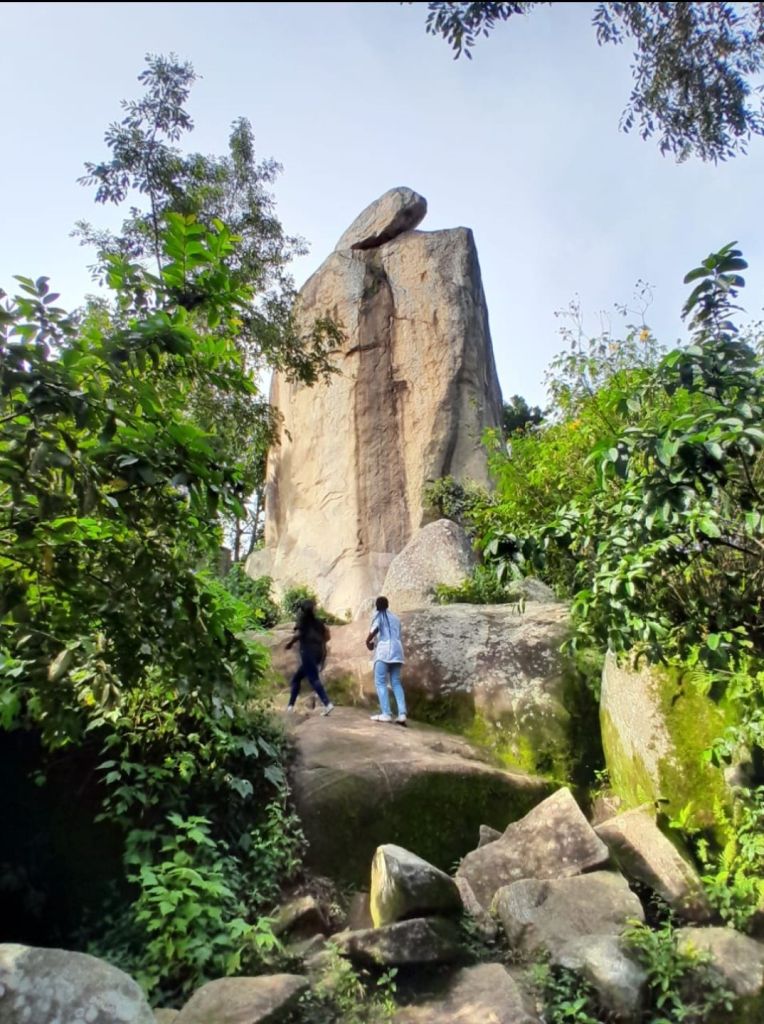
The walk wasn’t long, but it took us down a small hill to a gentle stream. Here, we met a few people—mostly older women and some children—gathered by the water.
Then came the uphill climb, winding through bushy undergrowth and a unique type of carpet grass. Jill, with some encouragement from me, took a small sample to try growing it back at her compound. A gardening experiment in the making—we will tell that story some other time.
Meeting the Stone
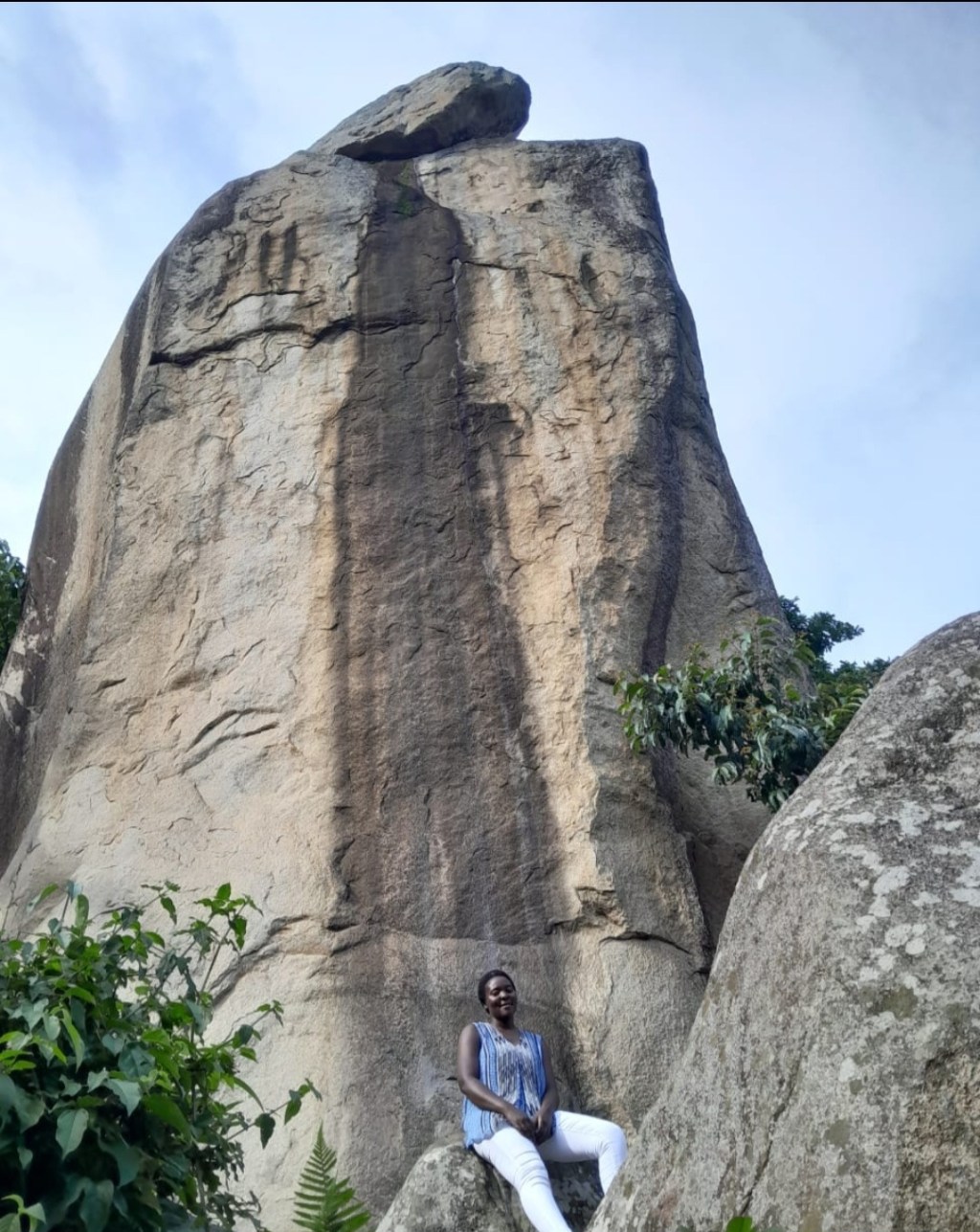
Eventually, we arrived at the base of the towering rock.
There’s a flat stone nearby—perfect for photos with the Crying Stone looming majestically in the background. A few other explorers were already there, clicking away. We wandered around a bit, taking in the surroundings and waiting for our moment to capture the memory.
When it was finally our turn, we took it all in—the scenery, the legend, and the mystique.
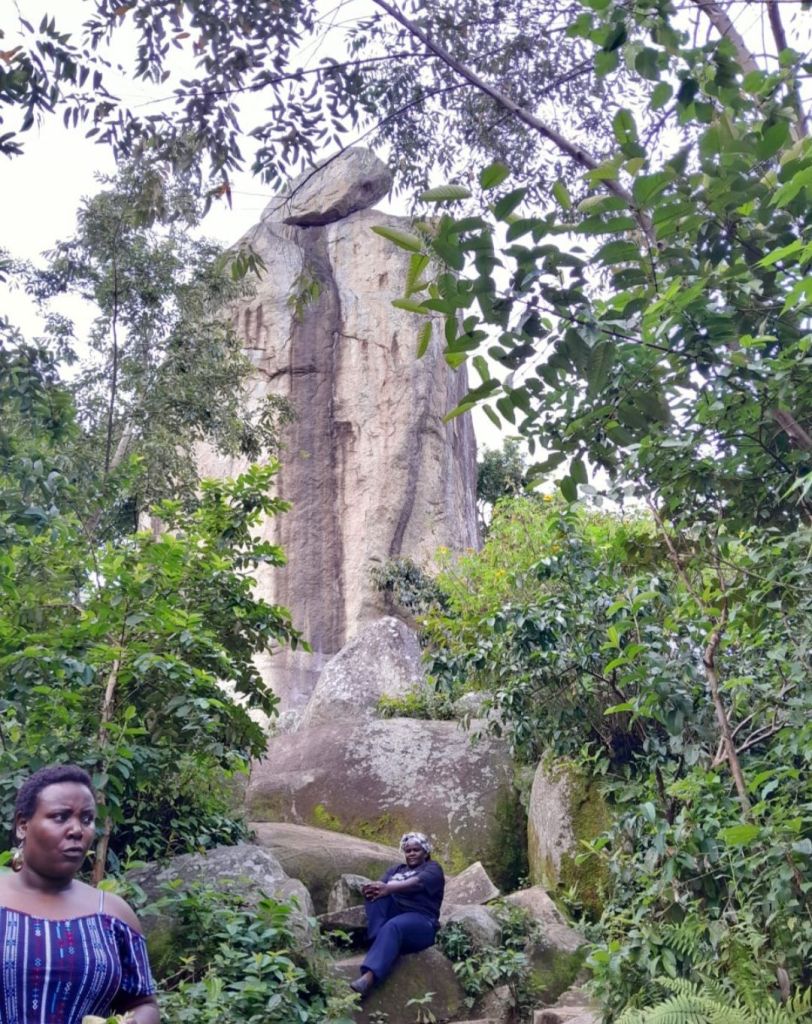
The Legend of the Crying Stone
Every famous rock in Kenya seems to have its own story, and this one is no exception.
Legend has it that the stone was once a happily married man. He had no worries—no reason to weep. But one day, his beloved wife left him for another man. Heartbroken, he wept endlessly, waiting for her return. She never came.
Over time, he turned into a rock, but his tears never stopped. Hence the name: The Crying Stone of Ilesi. But again, when I was growing up, some people said, this could be Lot’s wife, from the bible, who turned into salt.
More Than Just a Legend: Ikhongo Murwi
To most locals, however, the stone is known as ‘Ikhongo Murwi.‘
To the Luhya community—who have lived near the stone for centuries—Ikhongo Murwi holds deep cultural and spiritual significance. It is:
- A sign of the coming rains
- A protector of the people
- A boundary marker between the Luhya and Nandi territories
In fact, the Nandi once tried to topple the stone, believing its power gave the Luhyas an unfair advantage. They sent their fiercest warriors—but they failed. A hundred men lost their lives in the attempt.
Sacred Rituals in the Caves
The caves beneath Ikhongo Murwi are sacred. The Isukha sub-tribe of the Abaluhya tribe uses them for cleansing rituals—especially when someone has committed a crime or taboo. The rituals involve:
- Animal sacrifices
- Traditional food preparation
- The Isukuti dance, performed in celebration once the cleansing is complete
Where Have the Tears Gone?
In recent years, the Crying Stone no longer weeps. Has the heartbroken man finally moved on? Some say yes. Others blame eucalyptus trees planted nearby, whose thirsty roots may be draining the groundwater.
A Piece of the Journey
After taking it all in, we made our way down, not forgetting to pick a sample of the carpet grass. Whether or not it thrives at Jill’s place… well, that’s a story for another day.
There’s something sacred—almost magnetic—about places like this. One visit is never enough. I’ve already promised my niece and nephew that we’ll come back together. Because some places don’t just deserve to be seen—they deserve to be remembered.


 Waiting Differently
Leave a comment