So, here’s how it all began. Our big sister’s 50th birthday was around the corner, and let’s be honest, turning 50 isn’t just a regular birthday. It’s a milestone. A big one. So, we had to go all out. We planned it well, with surprises for her along the way, right from her finding us at SGR terminus while not expecting us, Vicky, our niece did a fantastic job of getting her here, until we finally made it to beautiful Malindi.
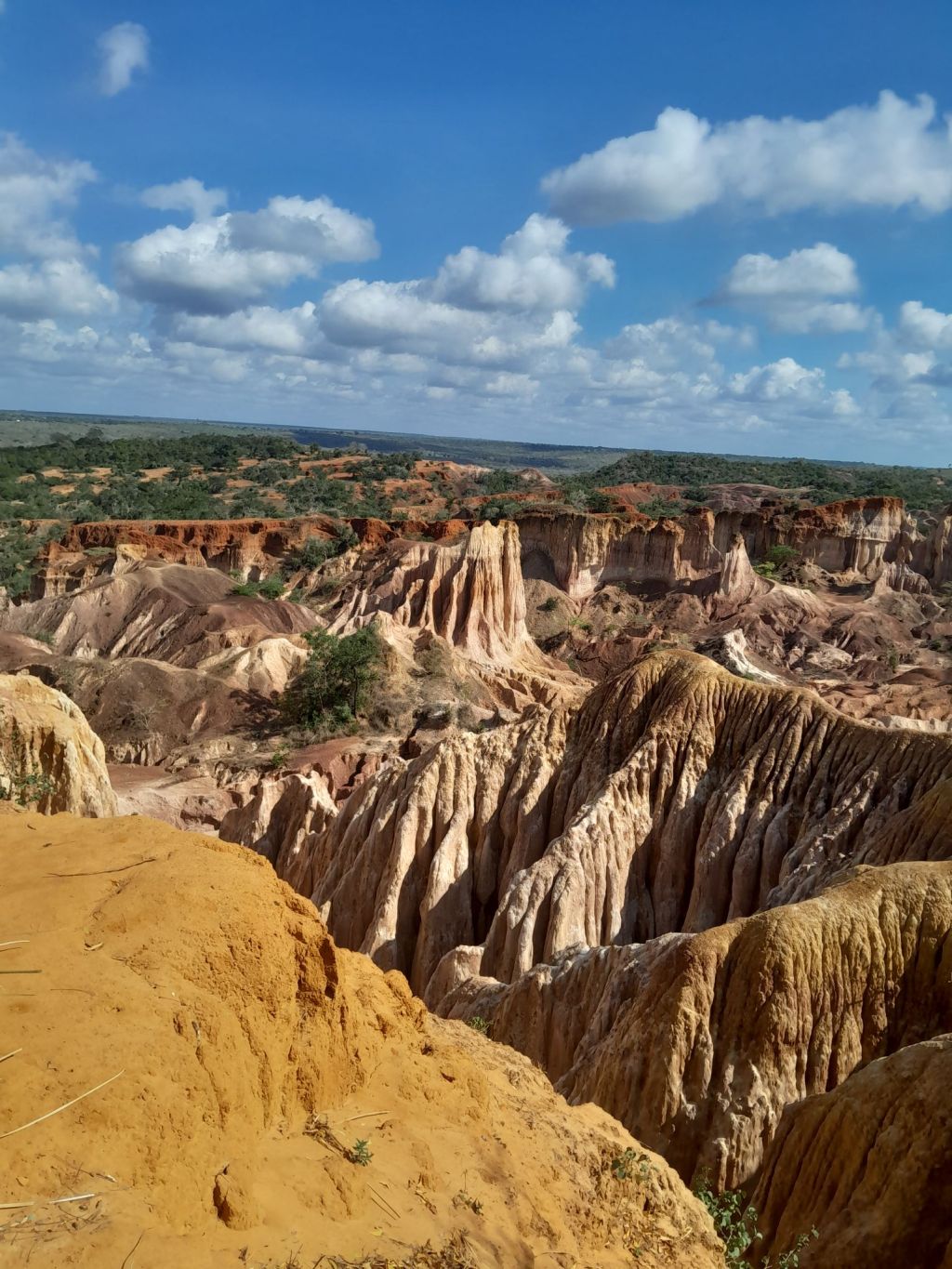
On the second day of our little expedition, we decided to explore Malindi. Tucked away in the heart of Kilifi County, just an hour’s drive north of Malindi town, lies a natural wonder that seems both otherworldly and ancient: Marafa Depression, more famously, and ominously, known as Hell’s Kitchen.
We set out early in the morning, heeding local advice to avoid the midday heat that famously scorches the canyon. By 7:00 a.m., we were on the road—five adults, two children, and one reliable Voxy van packed with excitement. Our driver, Mramba, knew the way well and even offered a few stories to build anticipation. The drive itself was pleasant, with the sleepy beauty of the countryside gradually waking up around us.
As we arrived at the entrance, there wasn’t much to see at first, just a simple shade structure made from plants and a small open-air café. But we could feel that something magnificent lay just beyond. After paying the entrance fee (which supports local community initiatives), we were introduced to our guide. Friendly and knowledgeable, he explained that the landscape ahead is constantly changing due to erosion from both wind and rain, no two visits to Marafa are ever quite the same.
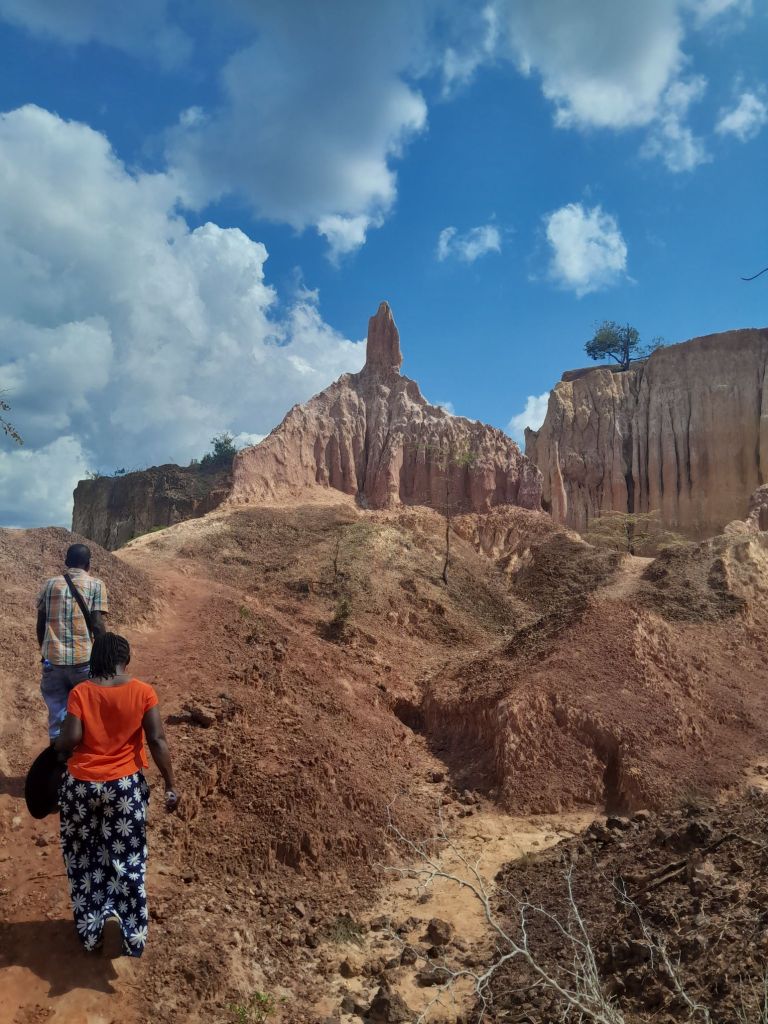
We began our descent into the depression. Our little nimble Demian walking faster than the rest of us wanting to take in everything at ones. The path, though well-defined, twisted and shifted along the edges of the canyon. Soon, the rock formations revealed themselves, towering cliffs of red, orange, and white sand and stone sculpted by centuries of weathering. The colors were vivid and surreal, like something lifted from a dreamscape.
Our guide shared bits of geology as we walked—pointing out different types of stone and explaining their origins. Some rocks, he claimed, were formed from ancient trees compacted over thousands of years. We listened, intrigued, even if a little skeptical. Along the way, we stopped at various vantage points to take in the views, each more dramatic than the last. He also tells us stories of the Kaya, elders of the area coming here to pray to the gods thus have a specific spot for that.
At one point, we paused to examine a formation that, from a distance, resembled the profile of a lion. Erosion has carved the cliffs into strange, striking shapes, and this one stood out—majestic and still, as though watching over the land.
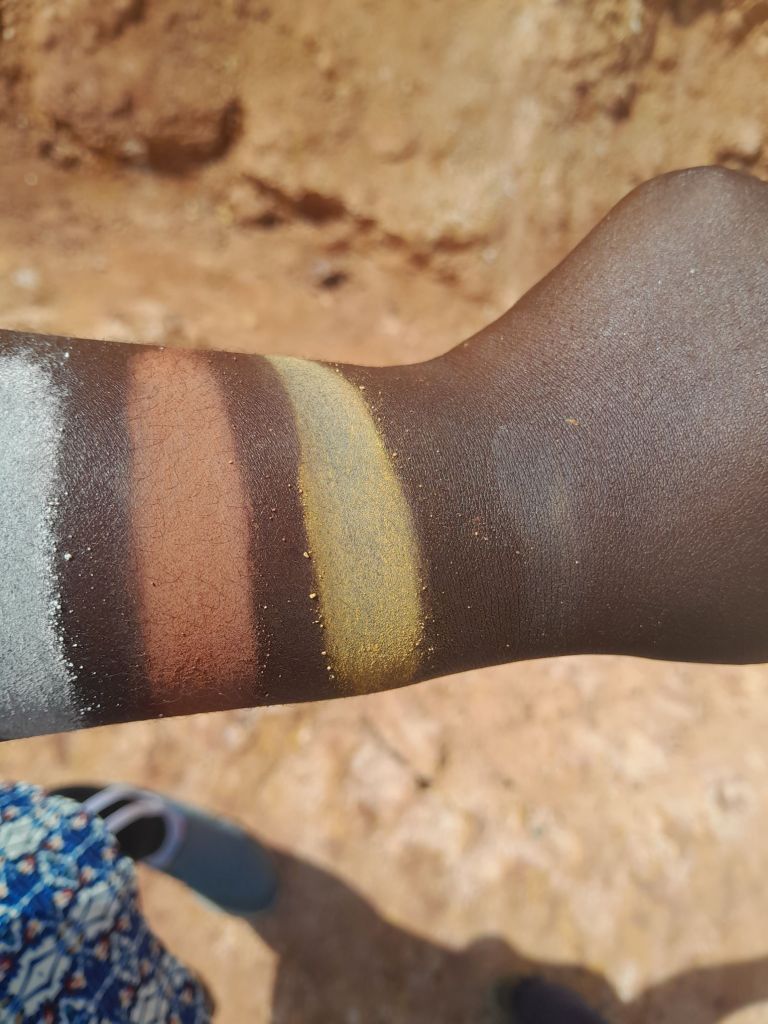
Further in, we reached a spot where the soil changed color dramatically. Reds, yellows, whites, and even purples—our guide explained that locals sometimes use this natural clay as makeup or body paint. He offered a small demonstration, brushing different shades across our hands. It was a playful, grounding moment, a reminder of how humans have always connected with the earth in both practical and creative ways.
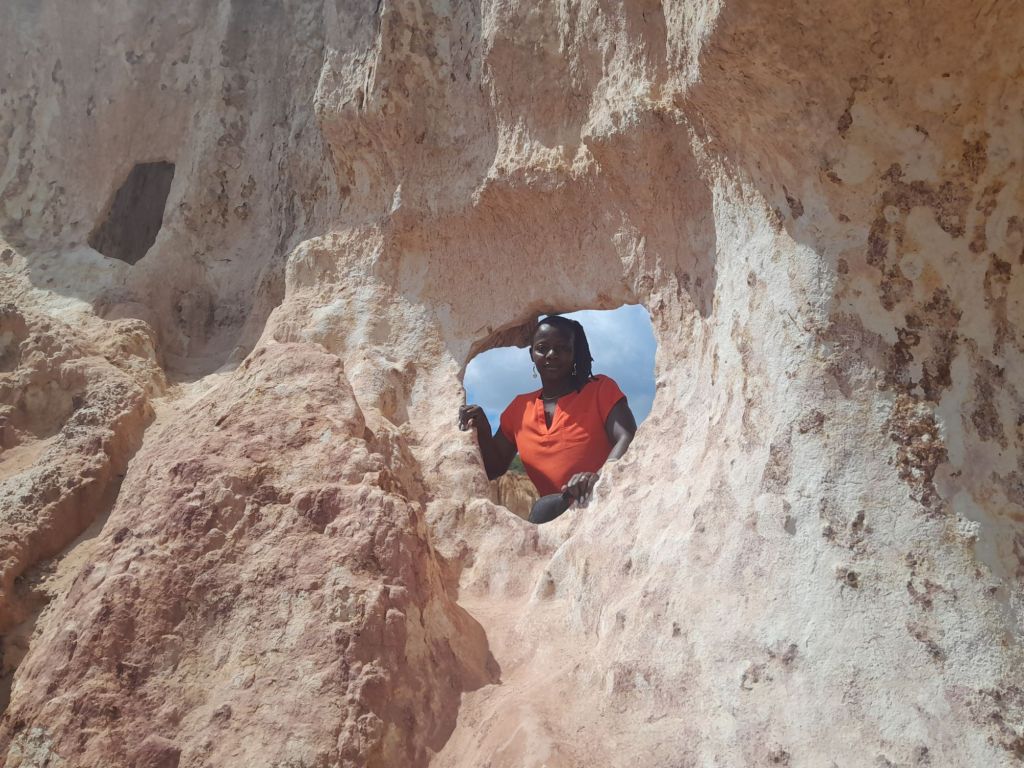
Our final stop was a natural “window” carved into the rock. We climbed up for photos—it felt like we were stepping out of the canyon walls themselves. The view from there was incredible, with layers of color and texture stretching in every direction. Though we missed the famed sunset (which we hear transforms the entire landscape into a canvas of gold and fire), the morning light still cast its own quiet magic.
As we made our way back, our guide shared the legend behind Marafa. Long ago, a wealthy family lived here—so wealthy, the story goes, that they bathed in milk instead of water. The gods, angered by this excess, sent rains to punish them. The village was swallowed by the earth, leaving behind the deep gorges and twisted spires of today. Whether myth or metaphor, the tale added another layer to the place—a sense of mystery, a whisper of something older than time.
We left the Marafa Depression slowly, taking one last look over our shoulders. It’s not just a canyon. It’s a place where nature, history, and legend meet—a place that leaves you a little quieter, a little more curious, and definitely more grateful for the stories etched into the land.


 Waiting Differently
Leave a comment